How to Work a Home Show So Your Booth Pays for Itself
Copy Link
Quick answer: A shed booth pays for itself when you decide in advance what a good conversation looks like, put something on the table people can touch, capture what each person said instead of just their name, and follow up within 48 hours. Most shed businesses do the opposite: they book the space, bring brochures, collect a stack of cards, and get home to a busy season that eats the follow-up. This article shows you how to run the whole thing.
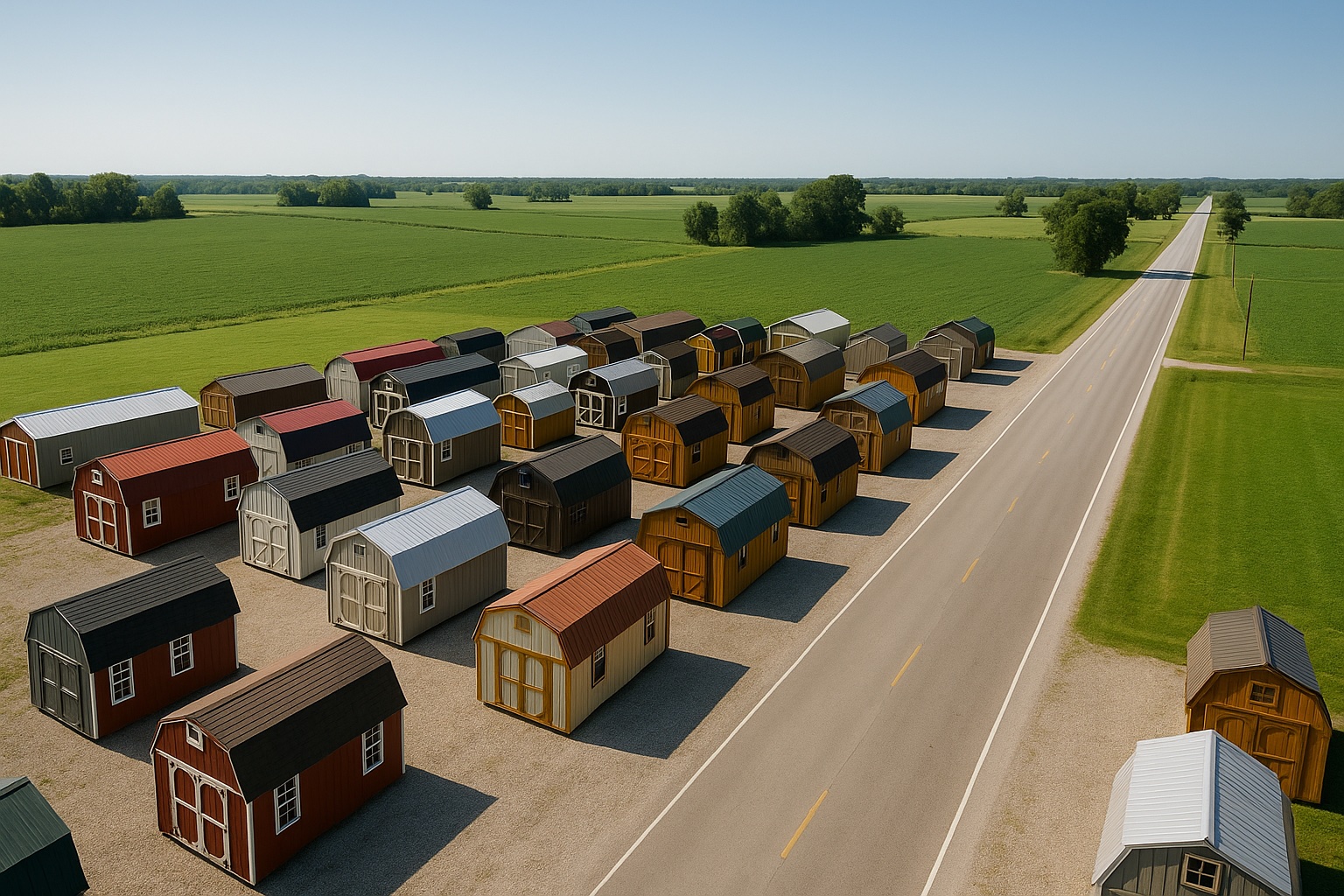
Home shows, county fairs, and farm shows are still one of the best places a shed business gets in front of buyers. A few hundred people walk past your booth in a weekend, most of them homeowners, a lot of them with a yard and a problem. Almost none of them were going to drive past your lot on their own, which is exactly why a show is one way around the Sales Lot Ceiling.
And most shed booths waste it. Two salespeople behind a folding table, a stack of brochures, a banner, and a bowl of candy. People walk past, and the ones who stop get a business card and a “give us a call.” Three weeks later somebody asks how the show went and the honest answer is that it’s hard to say.
It doesn’t have to work like that. Here’s how to run a booth that produces orders you can count.
Decide what a good conversation is before you book the space
You can’t tell whether a show worked if you never said what working meant.
Pick a number before you go. Not attendance, and not how many people took a brochure. Pick the number of real conversations you want, where a real conversation means you learned what the person needs and you got a way to reach them.
Something like: forty real conversations over the weekend. That’s your target, and it changes how the booth runs, because forty conversations in two days means everybody at the booth is working, not waiting.
Write down what you’ll count afterward too. How many conversations, how many quotes went out in the following week, and how many orders had come in by a date you set now. Pick the date before you go, because after the show your season starts and nobody circles back.
Put something on the table people can use
The thing that stops a person walking past is not a brochure. It’s something happening.
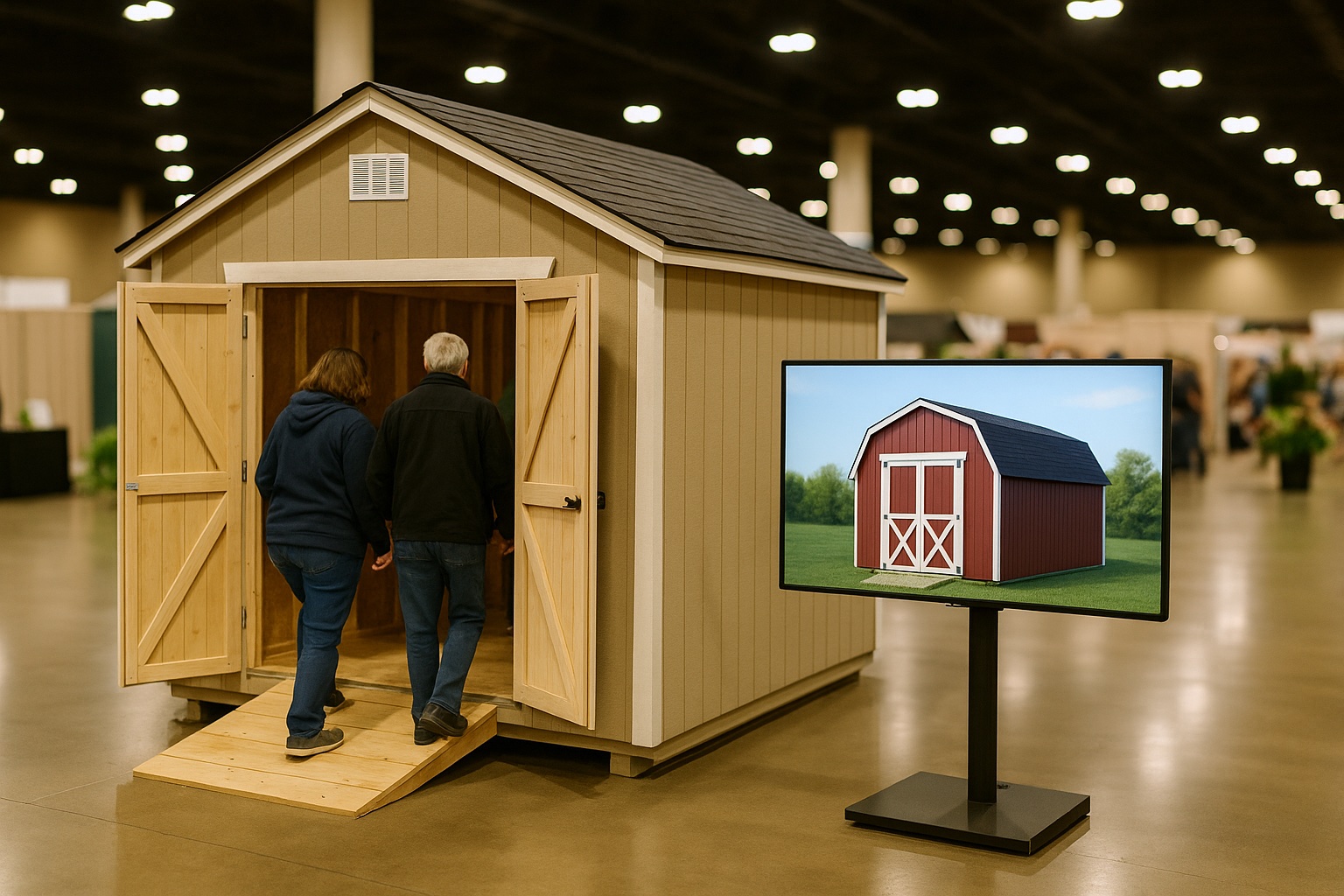
The strongest version for a shed business is a screen with your 3D configurator open, at standing height, facing the aisle. Let people build a shed. They pick a size, add a porch, change the color, and watch the price move. It takes about ninety seconds and it’s genuinely fun, which is why it draws a crowd, and a crowd draws more people than an empty booth ever will.
It also does your salesperson’s job for them. By the time the potential buyer looks up from the screen, they’ve told you the size they want, the options they care about, and the price they’re comfortable with, and they did it without being asked a single qualifying question.
Bring a building if you can get one there and the space allows, because people want to walk inside one. But a building is expensive to haul and it only shows one configuration. A screen shows every configuration you sell, and it fits in the truck.
Whatever you bring, have your prices visible. A booth where somebody has to ask what things cost is the same mistake as a website that hides it.
Capture what they said, not just who they are
This is the part that decides whether the show pays.
A stack of business cards is nearly worthless in three weeks, because you won’t remember which one was the man with the sloped backyard who needs it by October. The name is the least useful thing you collected.
So capture the conversation. If you’re building sheds on the screen, save each configuration with a name and a phone number attached, and you’ve got the whole thing already. If you’re working on paper, use a sheet with a line for a note and make the note mandatory:
- Mike R, 555-0148, 12×20 lofted barn w/ porch, wants it before deer season, worried about the slope in their backyard
- Sandra T, 555-0193, 10×12 she-shed, shopping for spring, asked about rent-to-own
Those two lines are worth more than a hundred business cards, because either one of them can be followed up on Monday by somebody who wasn’t even at the show.
Tell your team the note is the job. Names without notes don’t count toward the number.
Nobody sits, nobody eats at the booth
Booth staffing is simple and almost everyone gets it wrong.
Nobody sits down. A person sitting behind a table reads as closed, and people walk past a closed booth without deciding to. Nobody eats at the booth either, and nobody stands there on their phone. Two people minimum so one can step away, and swap them out every few hours because standing and talking for eight hours flattens anybody.
Stand at the front edge of your space, not behind the table. The table is a wall. Get in front of it.
And give your people an opening line that isn’t “how are you folks doing today,” which gets “just looking” every time. Something tied to what’s on the table works better: “You want to build one? It takes about a minute.” Most people say yes to that, because it sounds like an activity instead of a sales pitch.
Find the #1 thing blocking your online sales.
Free demo. You leave with 3 fixes to run this week.
Write the follow-up plan before you leave for the show
Here’s what happens otherwise. You get back Sunday night with a bag of leads. Monday there are deliveries to schedule and a lumber order and somebody quit. By the time you look at that bag, it’s been two weeks and every one of those people has either bought elsewhere or forgotten you.
So decide the plan now, while you’re planning the booth:
- Who calls the leads. Name the person.
- When. Every lead contacted within 48 hours of the show closing, which usually means Monday and Tuesday are blocked out for it before you ever go.
- What they say. The call references the note. “You built a 12×20 with the porch at our booth Saturday, and you mentioned the slope out back. I’ve got a couple of ideas on that.”
That opening works for exactly the same reason it works on a website lead. It proves somebody remembered, and it starts the call at the point the conversation left off instead of at the beginning.
Where to start this week
Before your next show, do two things. Get a screen and a stand so people can build a shed at the booth instead of reading about one. And block the two workdays after the show on your calendar right now, with the name of the person who’ll be calling them.
Those two moves do more for a booth’s return than a bigger space or a nicer banner.
Frequently asked questions
Are home shows worth it for a shed business? They can be, and whether they are comes down to follow-up rather than the booth itself. Set a target for real conversations before you go, capture what each person said rather than just their name, and contact everyone within 48 hours. A show that produces fifty names and no follow-up costs money. The same fifty names worked in two days is a strong weekend.
What should a shed business bring to a home show? Something people can use, ideally a screen where they can design a building and see the price change, plus visible pricing on your main styles. A display building draws people in if you can get one there, but a screen shows every size and option you sell and travels far more easily.
How do you collect leads at a trade show booth? Capture the conversation, not just the contact. Record what the person wants, when they want it, and any concern they raised, alongside their name and phone number. If you’re designing buildings on screen, saving each configuration with their contact details does this automatically.
Should a shed business go to industry shows too? Industry events like the Shed Builder Expo serve a different purpose than consumer shows. You’re not selling buildings there, you’re meeting suppliers, comparing tools, and talking to other shed businesses about what’s working. Set a goal for those too, even if it’s a list of people you want to sit down with.
Want your configurator running on the screen at your next show? Let’s set it up.


Copy Link