The Site Prep and Delivery Questions to Answer Before Your Buyer Asks
Copy Link
Quick answer: Every failed shed delivery started with a question nobody answered on the website: how level the ground has to be, how much room the driver needs to get in, and who’s responsible for what. A site prep page fixes it. This article shows you exactly what to put on that page, how to handle the permit question without giving legal advice, and why the delivery confirmation email is too late.
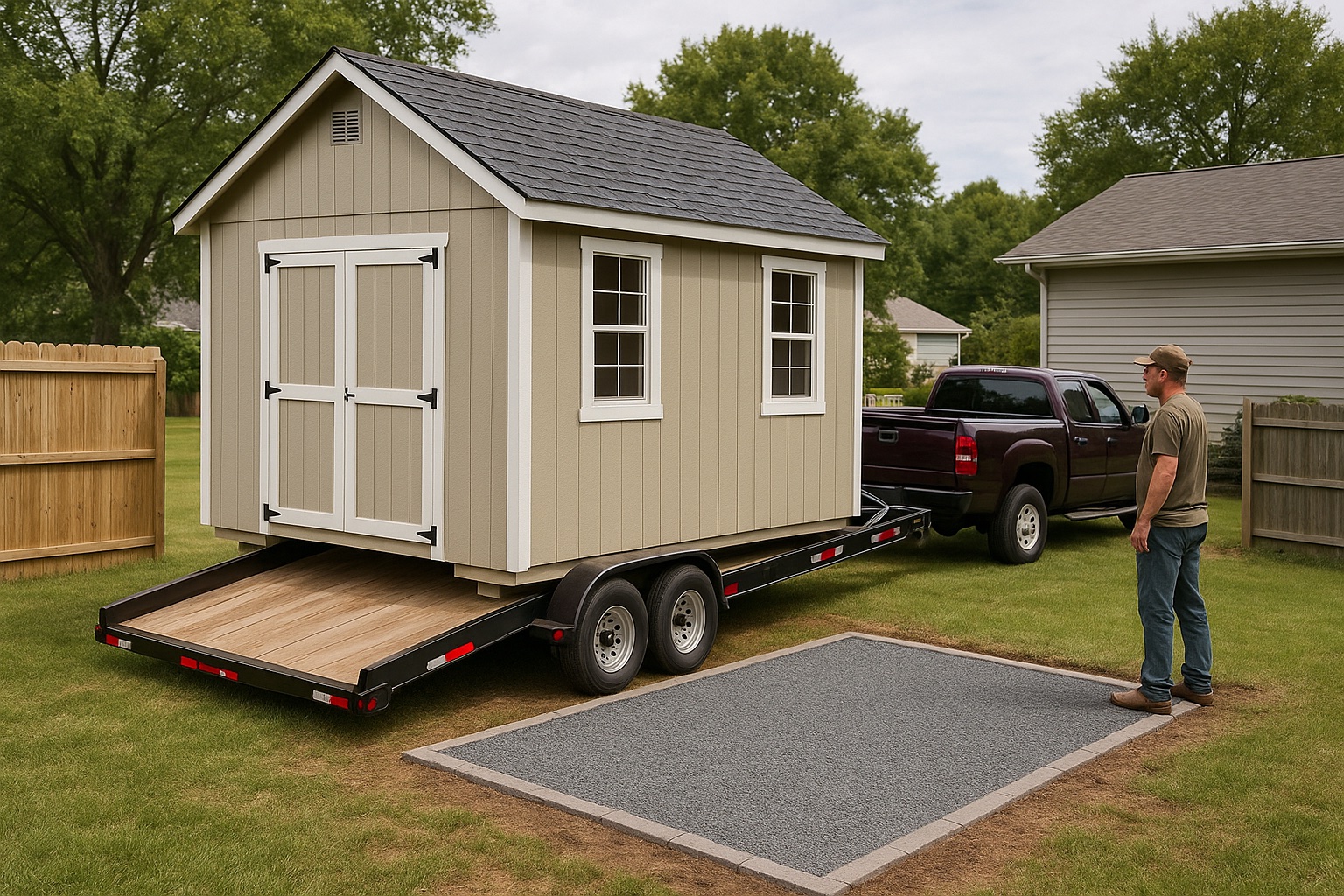
A driver pulls up to a house with a 12×20 on the trailer. The gate is too narrow. Or the yard slopes worse than anyone said. Or there’s a limb hanging low over the only way in.
Now you’ve spent money on a truck, a driver, and most of the day, only to call a customer who was excited this morning and tell them it isn’t happening. They’re not mad at the gate. They’re mad at you, and already deciding what they’ll say in their review.
Nearly all of it traces back to the same thing. They were never told what to do, at a point in the process when they still could have done it.
The site prep page most shed websites don’t have
Look at your site right now and find the page that tells a customer how to get ready for delivery. Most shed businesses don’t have one. The information exists, but it lives in the delivery confirmation email or in whatever the driver says when they call the day before.
By then, the customer has ordered, paid something, and scheduled. If their yard needs three loads of gravel and a week to settle, they found out three days too late.
Make it a page on your website, link it from your ordering page, and send it with every order confirmation. It’s one of the few pages on a shed site that does two jobs at once: it prevents failed deliveries, and it shows up in search when somebody types “how to prepare for shed delivery,” which is a person about to buy a shed.
Put your driver’s actual numbers on it, not general advice
This is where most site prep pages go soft. They say things like “the site should be reasonably level and accessible.” That’s useless to a person standing in their backyard trying to figure out if their gate is wide enough.
Your driver knows the real numbers. Go ask them, write them down, and put them on the page:
- How much slope you can work with, and what the customer should do when it’s more than that. Whether that’s a gravel pad, extra blocks, or leveling the ground first, say which.
- How wide an opening the truck needs, and how wide it needs to be if they’re bringing the mule instead.
- How much overhead clearance, so somebody thinks about the limb and the power line before delivery day.
- What surface the building sits on, and whether you set it on blocks or the customer needs a pad poured.
- How much room around the building the driver needs to work.
Those are your numbers. They’re different for a 8×12 on a trailer than a 14×40 that needs a mule, so give them by building size if that’s how it works for you.
Then add photos. A photo of a site that’s ready and a photo of a site that isn’t will do more than four paragraphs. Take them on your next two deliveries.
Answer the permit question without pretending to be city hall
This one makes shed businesses nervous, so most of them say nothing, and saying nothing means the customer either ignores permits entirely or spends two weeks worrying about them.
There’s a way to be genuinely useful without giving advice you’re not qualified to give.
Say that permit and setback rules are set by the city or county, not by the state, and that they vary a lot from one town to the next. Tell them to call their local building or zoning department. Then, and this is the part that helps, tell them exactly what they’ll ask them for: the size of the building, the height, and how far it will sit from their property lines. A customer who calls with those three numbers in hand gets an answer in one phone call instead of three.
Add the line that protects everyone: the permit is the property owner’s responsibility, and you deliver on the date they are ready.
You’re not researching their town for them. You’re saving them from finding out about a setback rule after the building is sitting on it.
Write down who’s responsible for what
One short list, in plain words, on the same page. Something like:
You handle: building the shed, delivering it on the scheduled day, setting it and leveling it on blocks, hauling your own debris.
The customer handles: clearing the path, having the site level and ready, permits and HOA approval, anything the site needs beyond standard blocking, being there or arranging access.
Then the sentence that saves the argument: what happens if the driver arrives and the site isn’t ready. Name your redelivery charge, or say the delivery gets rescheduled and how. Nobody enjoys writing that line. It’s a lot easier to write it once on a webpage than to explain it in a driveway with an upset customer.
Find the #1 thing blocking your online sales.
Free demo. You leave with 3 fixes to run this week.
Have your salespeople ask three questions before booking the delivery
The page does the heavy lifting, but the last check is a person.
Before anybody puts a delivery on the schedule, whoever booked the order asks three things and writes the answers down:
1. How wide is the narrowest spot the truck has to get through? 2. Is the spot where it’s going level, and if not, how far off is it? 3. Is anything overhead, like limbs or wires?
Three questions, about ninety seconds. If any answer is unclear, ask them to take two pictures with their phone and text them over. Drivers can read a photo of a backyard in about four seconds and tell you whether it’s going to work.
That call is also your last chance to catch the customer who read the page, meant to get the gravel in, and hasn’t. Ask them directly whether the site is ready today. Not whether it will be. Whether it is.
Where to start this week
Ride along on one delivery, or just corner your driver for fifteen minutes, and write down the five numbers above in their words. That’s your page. It doesn’t need to be pretty, it needs to be specific.
Then add the three questions to whatever your team uses to book a delivery, so no truck leaves the yard on an unconfirmed site.
Frequently asked questions
What do I need to do before a shed is delivered? Clear a path wide enough and tall enough for the truck to reach the spot, have the ground reasonably level where the building will sit, and handle any permit or HOA approval your city requires. The exact clearance and slope your delivery needs depend on the building and the equipment, so ask the shed business you’re buying from for their numbers.
Does a shed need a gravel pad or can it sit on the ground? Many portable buildings are set and leveled on blocks, which is why the ground underneath needs to be reasonably flat rather than perfectly finished. A gravel pad is often recommended for drainage and for larger buildings. The shed business delivering it will tell you which one your site and building call for.
Do you need a permit for a shed? It depends on your city or county, not your state, and rules vary widely from one town to the next. Call your local building or zoning department with three pieces of information ready: the size of the building, its height, and how far it will sit from your property lines. That’s usually enough for them to answer in one call.
Why should a shed business put site prep on its website? Because the customer needs it before they order, not the day before delivery. A site prep page cuts failed deliveries, which cost a truck, a driver, and a day, and it answers a question buyers are searching for while they’re deciding who to buy from.
Want a site prep page that actually gets read? Let’s look at your site together.


Copy Link