The Sales Lot Ceiling: Why Most Shed Businesses Stall at the Same Revenue Number
Copy Link
Quick Answer
Most shed businesses stall at the same revenue number because lot-based sales are capped by three physical inputs: lot frontage, drive-by traffic, and selling-season length. When those three numbers max out, revenue plateaus. The Sales Lot Ceiling isn’t a product problem or a pricing problem. It’s a math problem, and we’ve watched 100+ dealers solve it the same way: by adding sales channels that don’t run through the lot.
For most owner-led shed businesses, that ceiling sits between $1.5M and $3M per lot per year, depending on geography. The dealers who push past it almost always do it by layering a digital sales engine on top of the lot they already have.
What We Mean By the Sales Lot Ceiling
We’ve been building digital sales systems for shed businesses since 2017. After working with more than 100 dealers and manufacturers across the US and Canada, one pattern shows up so consistently that we gave it a name: the Sales Lot Ceiling.
It’s the revenue cap a shed business hits when the lot is doing most of the sales work. Not a slow quarter or a soft market, but a structural cap written into the geometry of where the lot sits and how the buyer behaves around it.
We see it across every size of operator. A single-lot dealer running between $1.2M and $1.8M for three years in a row. A manufacturer with a 12-dealer network where each lot is stuck somewhere between $1.8M and $2.4M and no one lot can crack the next tier. The shape of the ceiling is the same in both cases. The lot has run out of the inputs that drove its growth.
The Math: Why the Ceiling Lands Where It Does
A shed lot’s annual revenue ceiling is the product of four variables we look at every time a dealer asks us to model their growth.
Lot frontage (qualified buyers per visit).
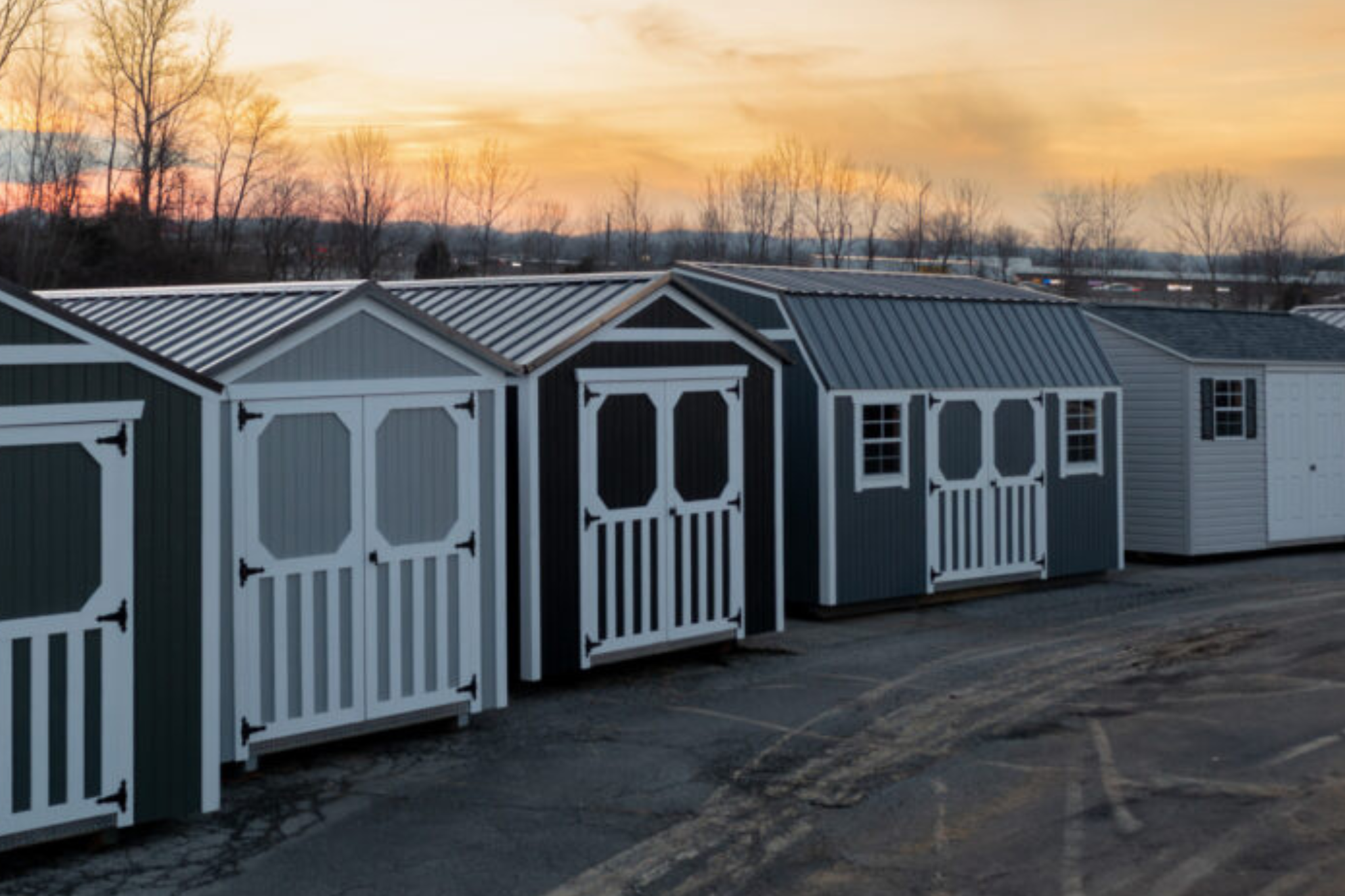
How many sheds the lot can display at once.
Wider lots showcase more configurations, which lifts walk-up close rate because buyers see something close to what they actually want. A 120-shed lot will outperform a 6-shed lot at equal traffic, every time.
Drive-by traffic (eyeballs per week).
A lot on a 35,000-cars-per-day arterial generates a fundamentally different ceiling than one on a 6,000-cars-per-day county road. Same product, completely different math.
Selling season (active weeks per year).
Climate, daylight, and regional buying patterns dictate how many weeks of the year your buyer is in the market. A shed lot in Tampa runs a 48-week season. A shed lot in central Vermont runs about 26. Subtract that gap and the Vermont lot is fighting a half-year handicap before anything else gets factored in.
Close rate on walk-ups.
What percentage of stops convert.
Across the lots we’ve benchmarked, cold walk-ups close somewhere between 8% and 12%. That number has been roughly flat in the industry for years, and it doesn’t move much regardless of how good your salesperson is.
Multiply those four variables and you get an annual order volume. Multiply by average order value and you have the revenue ceiling. Run the math for the average owner-led dealer and the answer lands at a maximum of somewhere between $1.5M and $3M per lot per year. Some operators stretch it by opening a second lot in a new market. That works. It doesn’t change the underlying constraint. It adds a second instance of the same capped system.
What Hitting the Ceiling Feels Like
Dealers near the ceiling almost never describe the problem in those terms. We hear:
“Sales feel harder than they used to.”
“My salesperson keeps missing quota, and we used to crush it.”
“Inventory is sitting longer.”
“Buyers keep asking why our prices look different from the ones on their phone.”
When we look at the numbers underneath those statements, the same signals show up. Foot traffic is usually flat or up, but conversions are down. Inventory aging has crept from 90 days to 120 or 150. The most productive salesperson on the lot is doing fewer demos per week, not because they slowed down, but because the qualified buyer flow has thinned. And a growing share of visits start with “I saw you online and wanted to see it in person,” which feels like a win until you notice the buyer found you somewhere your competitor was already standing.
If three of those signals are running together at your lot, the lot has hit its ceiling. The remaining sales are friction sales, deals you’re closing with effort instead of through the lot doing its job.
Why “More Leads” Doesn’t Move the Number
The reflex when sales slow is to spend more on local advertising. Billboards, radio, mailers, the same channels that worked a decade ago. We’ve watched dealers pour five and six figures into local-only campaigns over a single season and end the year flat. The spend wasn’t wasted, exactly. It was pointed at the wrong constraint.
Local ads push more cars past the lot. They work when the constraint is awareness. They stop working when the constraint is the lot’s structural cap. A 35,000-cars-per-day road doesn’t become a 70,000-cars-per-day road because you bought a billboard. You’re spending money to push more eyeballs through a channel that’s already maxed out on the inputs that matter.
This is the conventional wisdom we end up reversing on almost every onboarding call. Once the lot caps out, lead volume stops being the lever. The shape of the sales engine becomes the lever.
What We’ve Watched Work Instead
The pattern across the dealers who push past the ceiling, Dutch Boy Barns, Genesis Buildings, ShedsAZ, Smithbilt Industries, the rest of the 200+ shed businesses we’ve onboarded, is consistent enough that we treat it as the template.
They add a digital sales channel on top of the lot rather than trying to make the lot work harder.
A 3D configurator lets a buyer design their shed from home on a Tuesday at 9pm, when the lot is dark and the salesperson has gone home. A digital showroom keeps inventory in front of buyers in markets the lot will never physically reach. Targeted Google Ads find shoppers who would never have driven past you. None of those channels are bottlenecked by frontage, traffic, or season.
The conversion numbers tell the story most cleanly. Cold lot walk-ups close at 8% to 12%. Configured leads, buyers who designed their shed online before contacting the dealer, close at roughly 20%. The product is the same and the salespeople are the same. What changed is the buyer who walked in.
The lot is still useful. It becomes the place a buyer comes to sign after they’ve already designed their build online, walked the configurator twice, and picked a delivery date. We tell every dealer we work with: keep the lot, just stop letting it be the only engine driving the business.
What This Means For Your Next 12 Months
If the symptoms above sound like the last three quarters at your lot, the business isn’t in a sales slump. It’s hit a structural ceiling. That’s a different problem, and it takes a different fix.
A new salesperson, a new sign, or another local ad buy isn’t going to move the number. What moves the number is changing the shape of the sales engine. A configurator that lets buyers design from the couch. A website that keeps closing the deal after the lot has closed. Ads that find the buyers who would never have driven past you.
That’s the work. A different shape of sales engine, sitting on top of the lot you already have.
Frequently Asked Questions
Why aren’t my shed sales growing even though my lot is busier?
Foot traffic counts can rise while conversions fall. The number that matters isn’t stops at the lot, it’s how many of those stops become orders. If walk-up close rate has dropped over the last two or three years, buyers are arriving with online research already done and comparing your price against a configurator they used last night. The lot has shifted from comparison engine to verification stop, and the conversion math reflects it.
What revenue can a single shed lot realistically generate?
For most owner-led shed businesses, a single lot tops out somewhere between $1.5M and $3M per year, depending on geography, season length, and lot visibility. Opening a second lot in a new market can work for some operators, but it duplicates the constraint rather than removing it.
What’s a configured lead, and why does it close so much better than a walk-up?
A configured lead is a buyer who has already used an online 3D configurator to design their specific shed before contacting the dealer. They arrive at the conversation committed to a design, a price range, and a delivery timeline. Cold walk-ups close around 8 to 12 percent. Configured leads generally close around 20 percent, with some shed businesses driving that up to 50 percent through marketing automation, because most of the decision work has already happened before anyone picks up the phone.
The Bottom Line
Most shed businesses aren’t in a sales slump. They’re running into the math of their own lot. We’ve watched 200+ dealers and manufacturers sit in that exact spot, and the ones who push past it stop trying to squeeze more out of the lot and start building a sales engine that doesn’t end at the property line.
If you want to see what that engine looks like running on top of a shed business, the configurator, the digital showroom, the ad system that drives buyers to it, that’s what ShedPro builds. We can show you what it would look like on yours.


Copy Link