The 3 Questions Every Shed Buyer Asks Online Before They Ever Call You
Copy Link

Quick answer: Before a shed buyer ever calls, he checks three things on your website: how much a shed costs (including financing), what sizes and options he can get, and how to order one. This article shows you exactly what to put on your site to answer all three, the fears that stop most builders from doing it, and the mistakes that send buyers to the competition without you ever knowing. Fix these and you get the call. Miss one and you lose buyers you never even hear from.
Here’s how a shed sale really starts these days. A guy needs a shed. Before he drives anywhere or calls anybody, he pulls out his phone and starts looking. He finds your business, and he finds two or three others. He spends about ten minutes deciding who’s worth a call, and he makes that call to whoever answered his questions the best.
He’s asking the same three things every time: what’s it cost, can you build what I want, and how do I get one. Below is what each question really means and exactly what to put on your site so the answer is yes. None of this costs you a new website. Most of it you can fix this week.

Question 1: “How much is this going to cost me?”
This is the first thing on his mind, and it’s the thing most shed sites won’t tell him. He sees a nice photo of a barn and a “Contact us for a quote” button, and he keeps scrolling somewhere else.
Most builders hide the price on purpose, for two reasons. One, sheds are custom, so there’s no single price to post. Two, they don’t want the competitor down the road seeing their numbers. Both are real. Neither one holds up. The buyer doesn’t interpret a missing price as “the pricing is custom.” He reads it as “this is going to be expensive” or “these guys are hiding something,” and he clicks away. And the competitor who wants your prices can just call and pose as a customer. You’re not hiding them from him. You’re only hiding them from the buyer who’s ready to spend money.
You don’t need a full price list to fix this. You need to give him a real sense of the number. Three ways to do it, easiest first:
- Put a “starts at” price on each of your main styles. Right under the photo of your lofted barn, put a line like “10×16 Lofted Barn, starts at $3,400” (your number, not ours). Do that for your top five or six styles and you’ve answered the price question for most of the people on your site.
- Show the monthly payment, not just the sticker. A lot of shed buyers don’t think in $4,000. They think in “what’s it a month.” Put the monthly right on the page next to the sticker: “as low as $89/month” (your real terms). For a big chunk of buyers, the monthly number is the one that turns “someday” into “let’s go.”
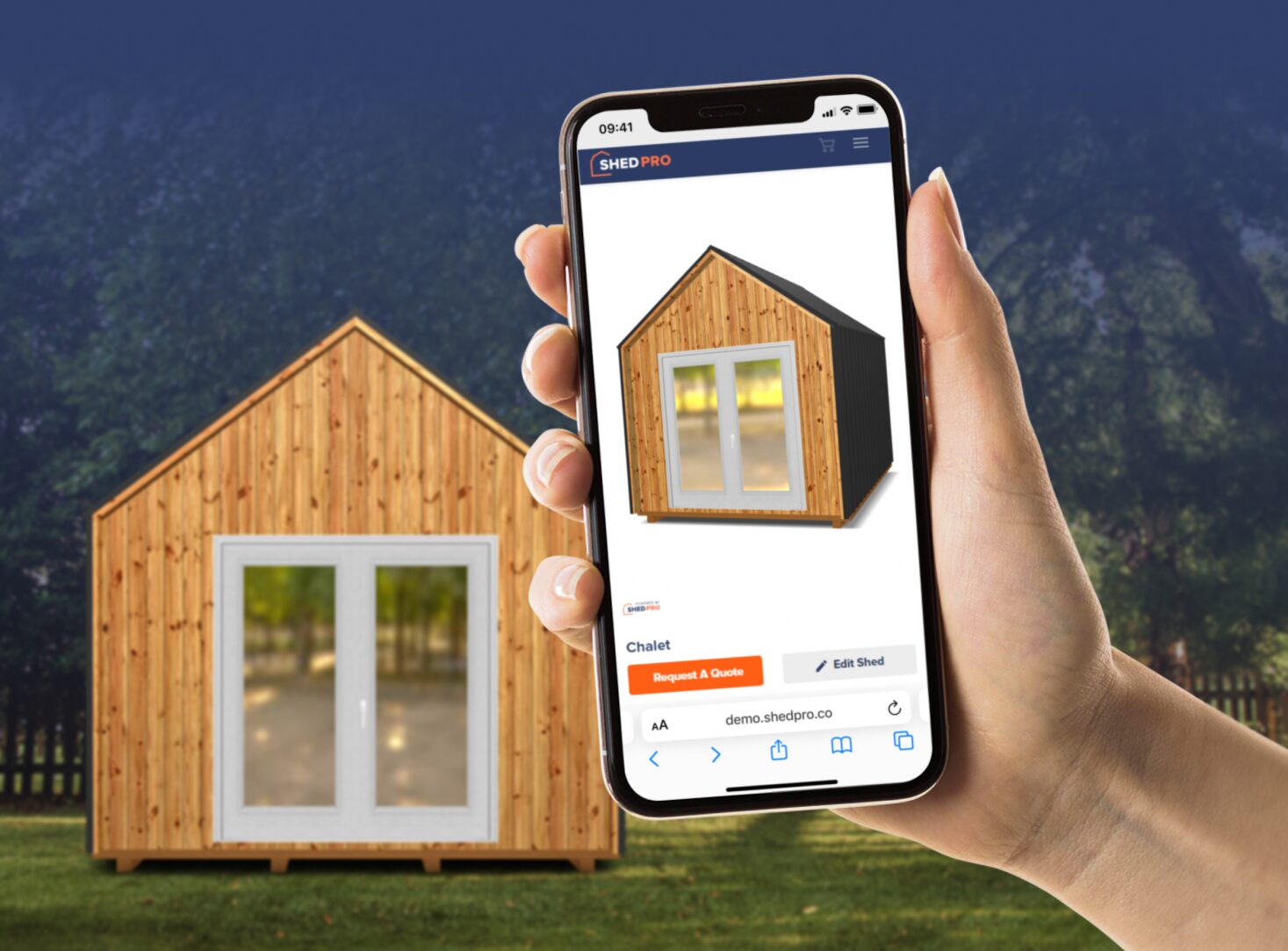
- Let him build it and see the price move. The strongest version is a tool on your site where he picks the size and options and watches the price change as he goes. He gets an exact number for the exact shed he wants, and he gets it at 9 p.m. without calling anybody. That’s what a 3D shed builder does.
There’s one more question sitting right under the price, and for a lot of buyers it’s the one that decides everything: can he pay for it over time? Most shed businesses offer rent-to-own, RTO for short, as the main way to do that, and plenty of buyers have no idea it’s on the table. He’s assuming he needs a bank loan or a credit score he doesn’t have, so he rules himself out before he ever fills out your form. Answer it on the page in plain words. Say that you offer rent-to-own, say whether there’s a credit check, and say what the terms run and what he needs to get started. A line like “Rent-to-own available, no credit check, 36 to 48 month terms, first payment gets it delivered” (your real terms, not ours) does the job. Then have whoever answers your phone say the same thing on every call, because a buyer who’s sure he can’t afford a $4,000 shed will keep listening once he hears $89 a month. Being able to answer the financing question the second he asks it, on the page and on the phone, is what keeps him from ruling you out on the sticker alone.
You don’t have to do all of this at once. Start with “starts at” prices on your best sellers this week. That one change alone puts you ahead of most of the shed sites in your area.
Question 2: “What sizes and options can I actually get?”
The real question under this one is “can you build the shed that’s in my head?” He’s already picturing it. The 10×16 with a porch, the door on the gable end, the color that matches his house. He wants to know in about thirty seconds whether you can make that, and a paragraph of text won’t tell him. He wants to see it.
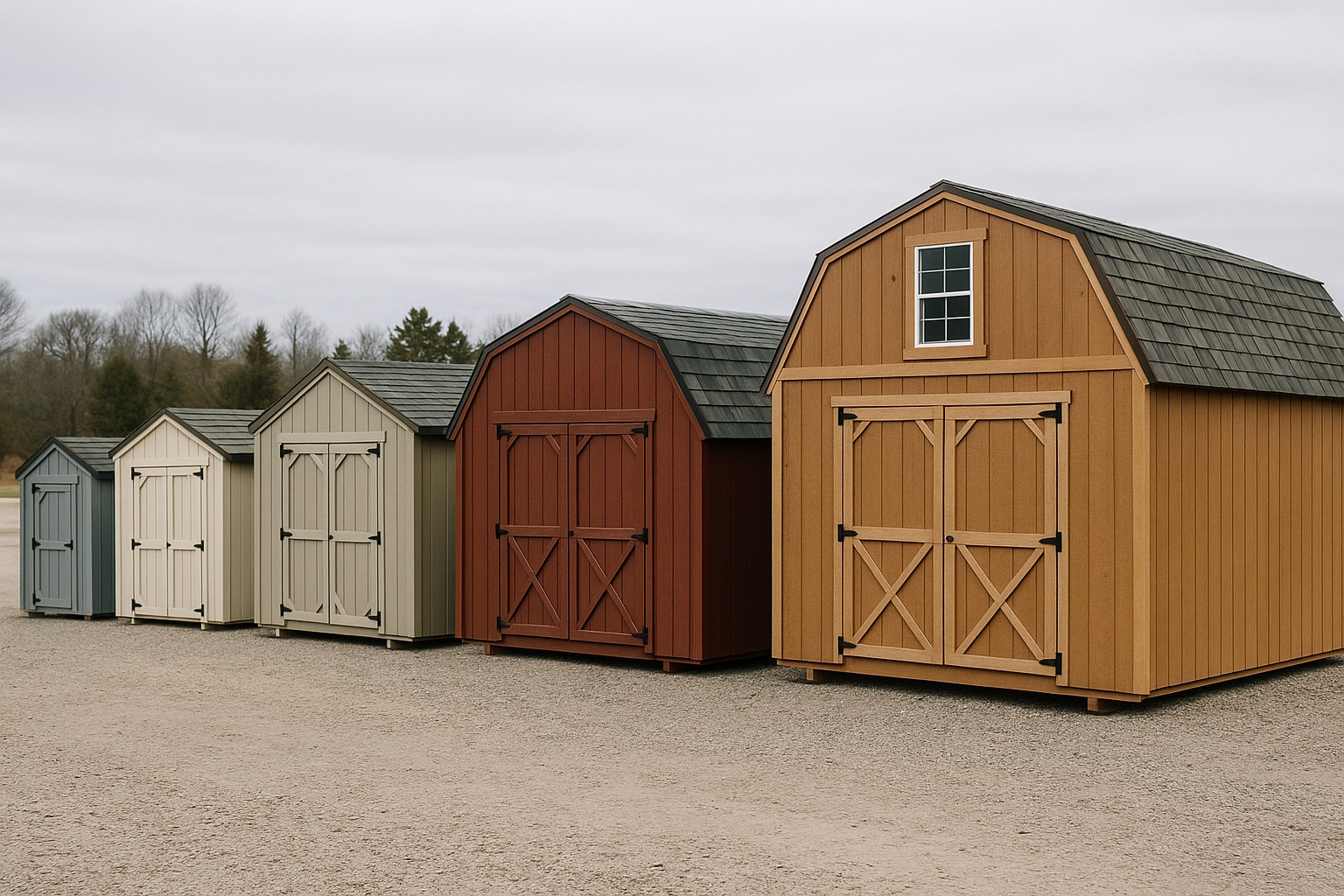
Here’s the mistake to avoid: a single giant dropdown with forty sizes, or a spec sheet that reads like a lumber order. That’s not shopping, that’s homework, and he won’t do it. Organize it the way he thinks instead: visually. Lead with your styles, put your best sellers first, and under each one show three things:
- A real photo of that building, not a stock image
- The sizes it comes in, from your smallest to your biggest
- The handful of options people actually ask about: porch, loft, extra door, windows, roof style, and your color choices
If you’re not sure your site answers this, run it against the questions buyers ask you on the phone every week. Can he see what sizes it comes in? Can he move the door? Can he add a porch or a loft? What colors does it come in? How tall is it inside? Metal roof or shingle? If your site can’t answer those without him calling, that’s the gap.
This is the other place a build-your-own tool earns its keep. Instead of you trying to show every size and option on a page, he picks them himself and sees his exact shed come together. He answers his own questions, and he has a lot more fun doing it than reading a spec sheet.
Question 3: “Okay, how do I actually order one?”
Say he’s sold. He likes the price, he found the size, he’s ready to move. Now what? This is where a shocking number of shed sites leave him standing in the road. There’s no clear next step, so he sets the phone down and tells himself he’ll deal with it later. Later never comes.
Give him an obvious next move, and give him a couple to choose from, because not everybody’s ready to do the same thing:
- “Get a price” or “Get a quote” for the guy who wants a number
- “Design your shed” for the guy who wants to build it himself online
- A phone number he can call or text, big and easy to find, for the guy who just wants to talk to a person
Whatever the button says, keep the form behind it short. Name, phone, and which building he’s after. That’s it. Every extra field you add, every “how did you hear about us” and “what’s your budget,” costs you people who would have filled out three boxes but won’t fill out ten.
Two more things close the gap most builders leave open. First, tell him what happens next. A line like “We’ll call you within one business day” beats silence, because he might assume you’ll get back to him within the next 30 minutes and decide to call your competitor when you don’t meet his unspoken expectation. Second, and this one’s on you, not your website: call him back fast. He’s shopping two or three builders at once. The one who calls back the same day usually wins the job, not because his sheds are better, but because he showed up first while the buyer was still thinking about it.
Where to start this week
You don’t have to fix all three at once. Pick the question your site answers worst right now and start there. For most shed businesses that’s the price, so if you do one thing this week, put “starts at” prices on your top five styles.
The builders winning online aren’t better builders and they aren’t louder. They just made it easy to find the price, see the options, and take the next step. Your buyer already has the questions. He’s going to get his answers from somebody. The only thing you’re deciding is whether he gets them from you or from the shop down the road.
Related: for more on that third question, see “Let Customers Build Their Own Shed Online.”
Frequently asked questions
Should I put prices on my website if my sheds are custom?
Yes. You don’t post a full price list, you post a “starts at” price for each main style. That gives a buyer a real sense of the number without pinning you to an exact figure on a custom build. A missing price doesn’t read as “custom” to a buyer, it reads as “expensive” or “hiding something,” and he leaves.
Won’t my competitors see my prices?
They can already get them by calling and posing as a customer, so a missing price doesn’t hide anything from a competitor. All it does is hide the number from the buyer who’s ready to spend money. You’re protecting the wrong person.
What’s the fastest way to improve my shed website?
Answer the three questions a buyer asks before he calls: what it costs, what sizes and options you offer, and how to order. Start with price, since that’s the one most sites get wrong. Put “starts at” prices on your top styles and you’re ahead of most of your local competition by the end of the week. In Tennessee that means showing rent-to-own terms next to the price, because that is how a lot of the state buys.
How short should my quote form be?
Ask for name, phone, and which building he wants. That’s enough to call him back. Every extra field loses people, so cut anything you don’t truly need to make the first call.
Want to see where your shed website is losing buyers? Let’s take a look at your site together.


Copy Link