The Off-Season Is the Best Time to Fix Your Shed Website
Copy Link

Quick answer: The slow season is the best time for a shed business to fix its website, because you finally have the time you won’t have in the spring rush. Focus on four jobs: get your starting prices on the site, make it work on a phone, shoot fresh photos of your best buildings, and fill out your Google Business Profile. This article walks you through exactly how to do each one. Do the work now and you walk into spring set up to sell instead of playing catch-up.
Every shed business knows the rhythm. Spring and summer, you can barely keep up. Then things slow down, the lot gets quiet, and you finally get a breath. Most owners use that breath to catch up on paperwork and maybe take a few days off. Both of those are fine. But the slow season is also the best window you’ll get all year to fix the thing that costs you sales the rest of the year without you ever noticing: your website.
Here’s why the timing matters. When you’re slammed in the spring, you don’t have a spare hour to look at your site, let alone change it. So it sits there, a little out of date, a little hard to use, losing you buyers you never even hear about. The off-season is the one stretch where you’ve got the time to fix it before the rush hits. Below are the four jobs worth doing, and how to actually do each one.
Job 1: Get your starting prices on the site
If a buyer can’t get a sense of price on your site, a lot of them leave without a word. The slow season is when you finally have time to sort this out, because it takes an afternoon of real work.
Here’s the job: sit down with your five or six best-selling styles and write down a “starts at” price for each one. Your 10×16 lofted barn, your 12×24 garage, whatever moves. Then put those numbers right under the photos on your site, like “10×16 Lofted Barn, starts at $3,400” (your number, not ours). If you do rent-to-own, add the monthly too, because a lot of buyers think in “what’s it a month,” not the sticker.
You’re not posting a full price list and you’re not pinning yourself to an exact number on a custom build. You’re giving a ballpark so the buyer knows you’re in his range. This is the single highest-payoff thing on this list, and it’s the one most shed sites skip.
Job 2: Make your site work on a phone
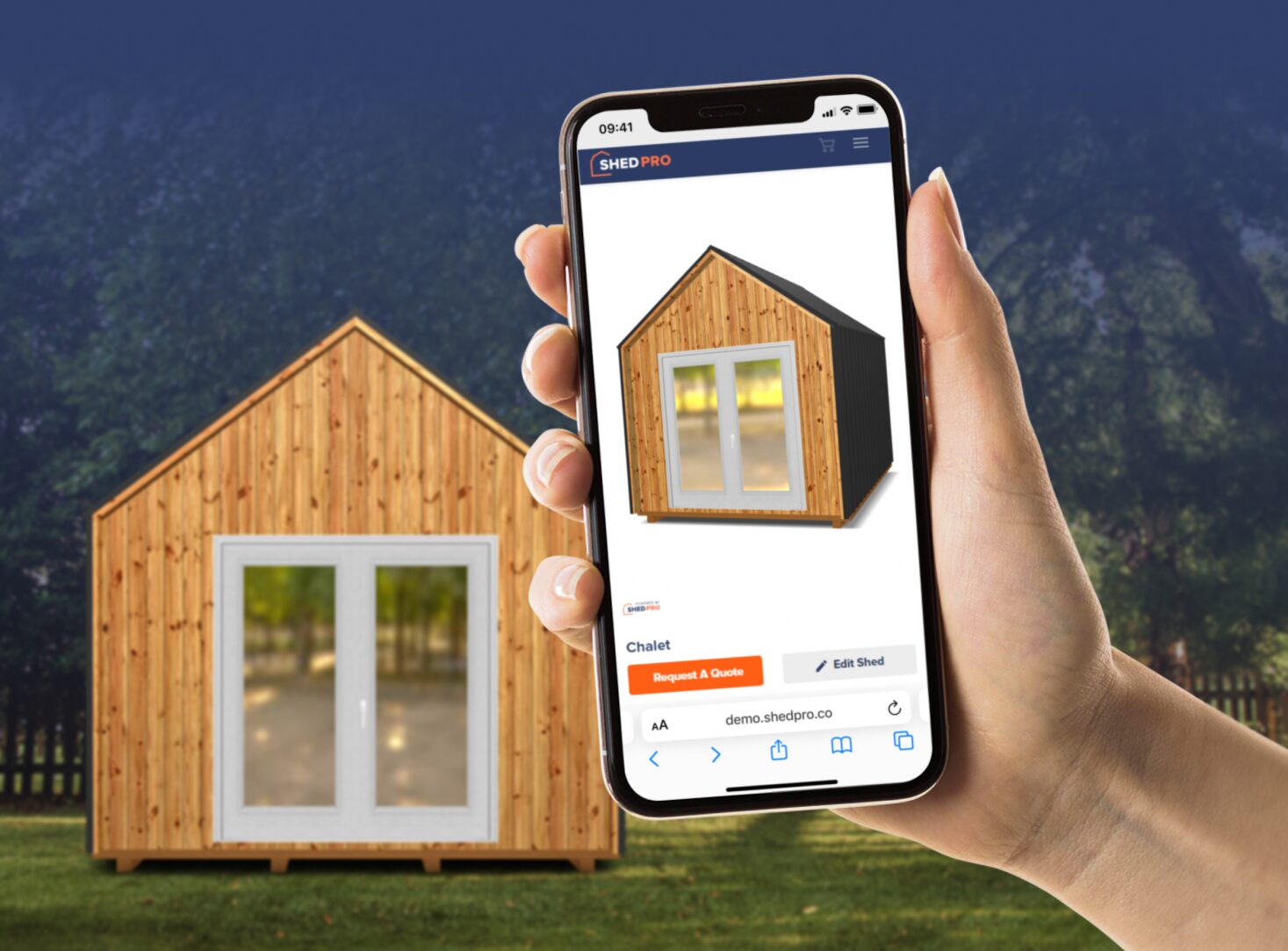
Pull up your own website on your phone the way a customer would. Odds are your buyer is on his phone, not sitting at a desk, so this is the screen that matters.
Now try to actually do what a buyer does, and time yourself. Can you find a price in under a minute? Can you see what sizes a building comes in? Can you reach out without pinching and zooming? While you’re in there, check three things builders miss: is your phone number tap-to-call (he should be able to tap it and have his phone dial), are your photos loading fast or crawling, and are your buttons big enough to hit with a thumb? Whatever trips you up is your fix list. If it’s a pain for you, it’s a pain for him, and he’s got less patience than you do.
Job 3: Shoot fresh photos of your best buildings
Old, dark, cluttered photos don’t sell, and a lot of shed sites are still running pictures from three years ago. The off-season gives you the time to fix it right.
Pick a clear day with good light, morning or late afternoon beats high noon. Clean off your best-selling styles first, sweep them out, open the doors. Then shoot each building three ways: straight on from the front, from an angle so it looks three-dimensional, and one from inside looking out so he can picture standing in it. Get the loft, the porch, the nice door, whatever you’re proud of. Real photos of the buildings you actually make beat a stock photo that could be anybody’s shed, every time.
Job 4: Fill out your Google Business Profile
When someone in your area searches for a shed, do you show up? Your Google Business Profile is the free listing that puts you on the map, and the slow season is when you have time to do it right.
Claim it if you haven’t, then fill out every field. Your service area (the towns you cover), your hours, the right business category, and photos of your buildings. Then do the thing most builders never get around to: ask a handful of happy customers for a review. You’ve got time now to actually make those calls, and reviews are one of the biggest reasons you show up ahead of the next builder when a local buyer searches. A profile that’s filled out and reviewed beats an empty one nearly every time.
Where to start this week
You don’t have to do all four at once. If you do one thing this week, do Job 1: write down starting prices for your top five styles and get them on the site. It’s the fix that turns the most browsers into calls, and it’s the one your competition is probably still skipping.
None of this is glamorous. But the shed business that spends the quiet months getting its online house in order is the one that’s already ahead when the phone starts ringing again. You’ve got time right now that you won’t have in April. Use it on the setup that sells for you all year long.
Related: once your site is sharp, see “How to Compete With the Bigger Shed Builder Down the Road.”
Frequently asked questions
When is the best time to update a shed website?
The off-season. You have time in the slow months that you won’t have once spring buyers start calling, so it’s the natural window to fix pricing, photos, and your Google listing.
What should a shed business fix first in the off-season?
Start with pricing. Write down a “starts-at” price for your top five styles and put it on the site, because a buyer who can’t find a price often leaves without a word. Then handle mobile, photos, and your Google Business Profile.
How do I get my shed business to show up on Google?
Claim and fully fill out your Google Business Profile: service area, hours, category, and photos. Then ask a handful of happy customers for reviews. A filled-out, reviewed profile shows up ahead of an empty one when local buyers search.
Why does my shed website need to work on a phone?
Odds are your buyer is shopping on his phone, not a computer. If your site is hard to read or use on a small screen, you lose buyers before they ever reach out. Check that your phone number is tap-to-call and your buttons are big enough for a thumb.
Want your shed website ready before the spring rush? Let’s get it done while things are slow.


Copy Link