How We Build a 24/7 Shed Showroom Without Adding Lot Inventory
Copy Link
Quick Answer
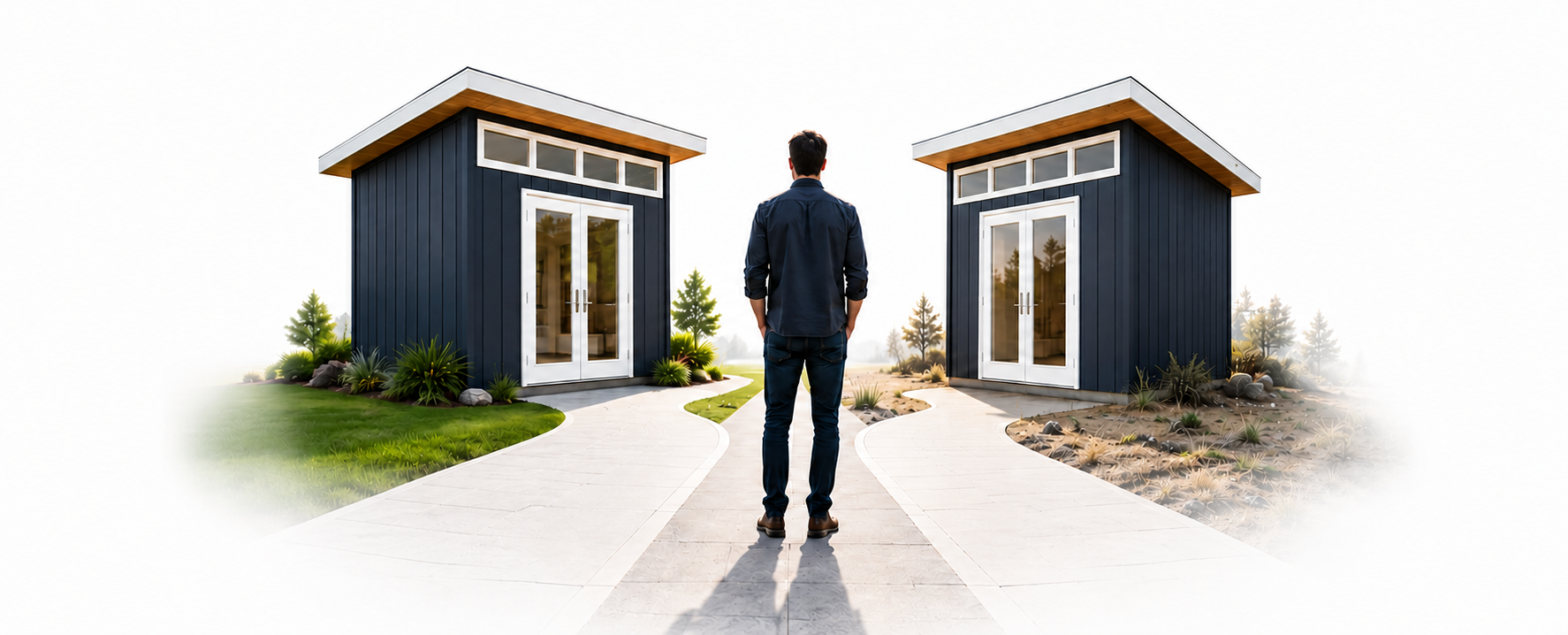
A 24/7 shed showroom is a digital sales surface that keeps converting buyers after the physical lot has closed for the day, the season, or the local market boundary. We build it as a three-component stack: a 3D configurator, a product catalog with online inventory, and a paid traffic engine. Each layer plugs into the next, and each one earns its place by handling a specific stage of the buyer’s journey the lot can’t reach.
Across the 100+ dealers we’ve built this stack for, the typical pattern is a 2X increase in qualified leads within 90 days and a 30% close rate on configured leads versus the 8% to 12% rate on cold lot walk-ups. The stack doesn’t replace the lot. It runs in parallel and feeds the lot warm buyers who already know what they want.

Why Online Shed Showrooms Look Different From Other E-Commerce
Selling sheds online isn’t the same problem as selling shoes online. A shed is a high-consideration, high-customization purchase. The average buyer makes a decision over 14 to 45 days. They configure dimensions, siding, roof style, door placement, windows, lofts, electrical packages, and color. They want to see what their specific build will look like before they commit five figures to it.
That set of constraints rules out most generic e-commerce templates. Shopify with a configurator plugin doesn’t quite work. A standard catalog page with size dropdowns doesn’t either. The buyer needs to see the shed they’re buying, priced and rendered, before the lead gets warm enough to convert.
The 24/7 Showroom Stack is what we’ve built around that constraint. It’s the structure that consistently produces configured leads instead of cold form fills.
The 24/7 Showroom Stack
Component 1: The 3D Configurator
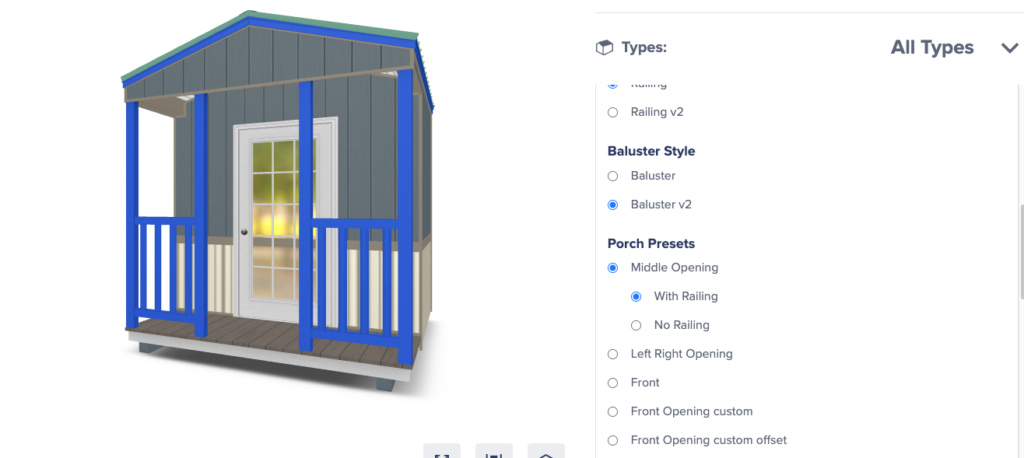
The configurator is the engine. Everything else in the stack exists to either feed it traffic or follow up on what it produces.
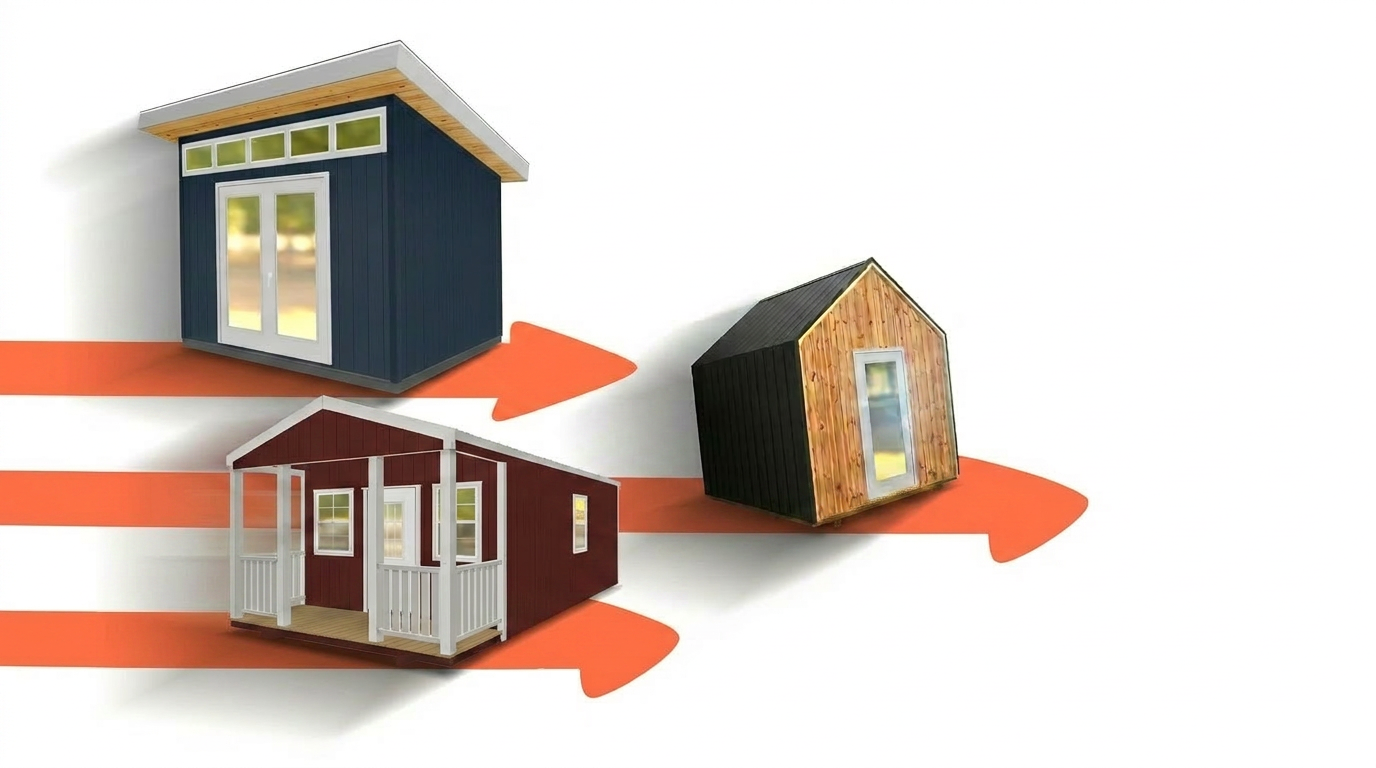
A shed configurator does five jobs at once. It lets the buyer design their specific shed, it generates a real-time price as the buyer makes choices, it captures a lead at the point of highest intent (when the buyer wants to save, share, or move forward with their design), it instantly generates a floorplan and work order, and it allows the customer to pay for their order.
The shed-specific edge cases matter here. A generic 3D builder usually breaks on dormers, custom porch configurations, and interior options like workbenches, electrical packages, and shelving. Buyers who can’t visualize their actual configuration hesitate, and hesitation is what kills five-figure deals in this category.
When the configurator is featured prominently above the fold on the homepage and product pages, a strong share of qualified visitors engage with it. Submission rates vary widely, though. In our data, the share of configurator sessions that turn into a submitted lead averages around 5% and reaches up to 30% on the best-performing sites.
Component 2: The Product Catalog and Online Inventory
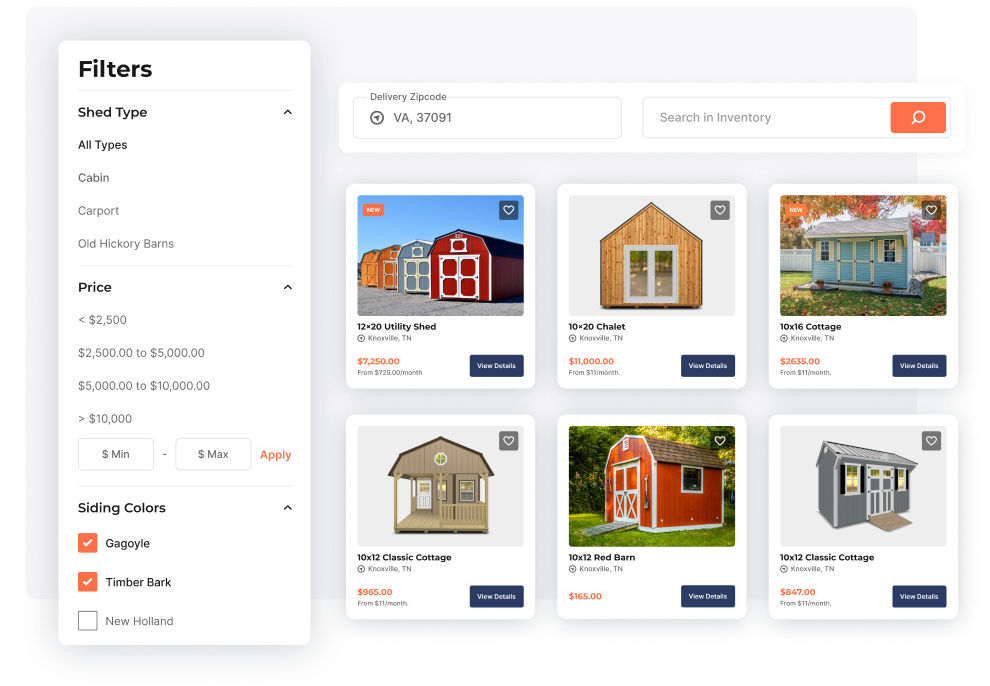
The configurator handles customers who want to design. The product catalog handles customers who want to pick a pre-designed shed. Online inventory handles customers who want to buy what’s already built.
Across the businesses we work with, the buyer mix runs roughly 60% custom-leaning and 40% inventory-leaning. The inventory buyers are typically further along in their decision and looking for a specific shed they can take delivery on within one to two weeks. The configurator buyers are usually earlier in the journey and willing to wait six to twelve weeks for the exact build they designed.
The online inventory system has to handle both lanes. Each lot’s actual on-hand inventory shows in real time with prices, dimensions, photos, and a one-click “reserve and finance” path. The configurator results integrate into the same online inventory system so the buyer doesn’t have to start over to submit their custom build.
The catalog page is also where most of the SEO traffic lands. Generic shed buyers searching for “10×12 lofted barn near me” find the catalog first, and a well-structured product page with full specs, pricing, and reviews converts that traffic at meaningfully higher rates than a homepage funnel ever does. Those searches are local by nature, and what buyers look for varies by state.
Component 3: The Paid Traffic Engine
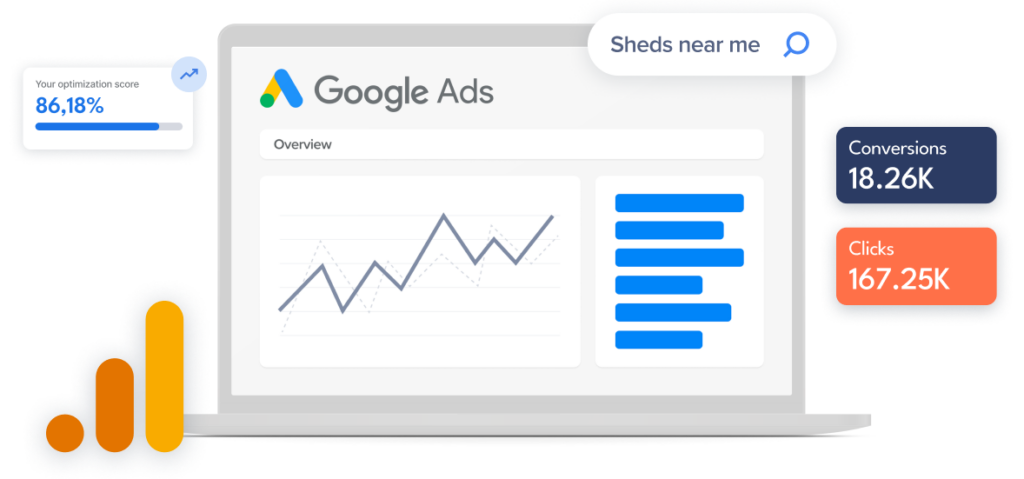
A configurator and catalog with no traffic is a parked car with no gas in the tank. The paid traffic is the fuel that brings the buyers in.
For shed businesses, we run paid traffic across Google Search. It captures buyers in active research mode (queries like “buy 12×16 shed Tampa” or “lofted barn for sale near me”) rather than tire kickers like you might find on other online channels.
Google closes the buyers that other online channels may have warmed up. It can capture buyers who arrived via word of mouth or signage. We typically see cost-per-qualified-lead between $5 and $65 across this channel mix, with lower costs in regions with stronger seasonal demand and higher costs in regions with denser competition.
The Order We Install the Stack
We don’t recommend building all three components at once. The right install order is what produces the compounding effect.
Most dealers start with the configurator and online inventory (Components 1 and 2) before turning on the paid traffic engine. Spending on traffic before the configurator is live is wasted money, because the on-site conversion path can’t capture what the ads bring in.
Once the configurator and catalog are converting at baseline rates, we layer in the paid traffic engine. Component 3 is the one that scales the system, and it’s also the one that fails if the first two aren’t tight.
The full install takes 6 to 12 weeks for most owner-led shed businesses, depending on how much existing infrastructure they have. The compounding return starts in month two and tends to fully ramp by month four.
Frequently Asked Questions
Can I run a digital shed showroom without a 3D configurator?
You can, and some businesses do. The math gets worse without it. Configured leads close at roughly 30%, while leads submitted through a generic contact form close at the same 8% to 12% rate as cold walk-ups. Without the configurator doing the early decision-making work, the lead arrives at the salesperson cold, and the buyer’s confidence in what they’re ordering is lower at the point of close.
How long before the digital showroom starts paying for itself?
For most businesses we onboard, paid traffic and configurator volume start producing closed orders in month one, but the system fully ramps in month three or four as retargeting audiences mature, ad bids optimize, and lead volume accumulates enough data to refine. The payback window on the full stack typically sits between four and eight months on a $2M-revenue lot.
Does this replace my physical lot?
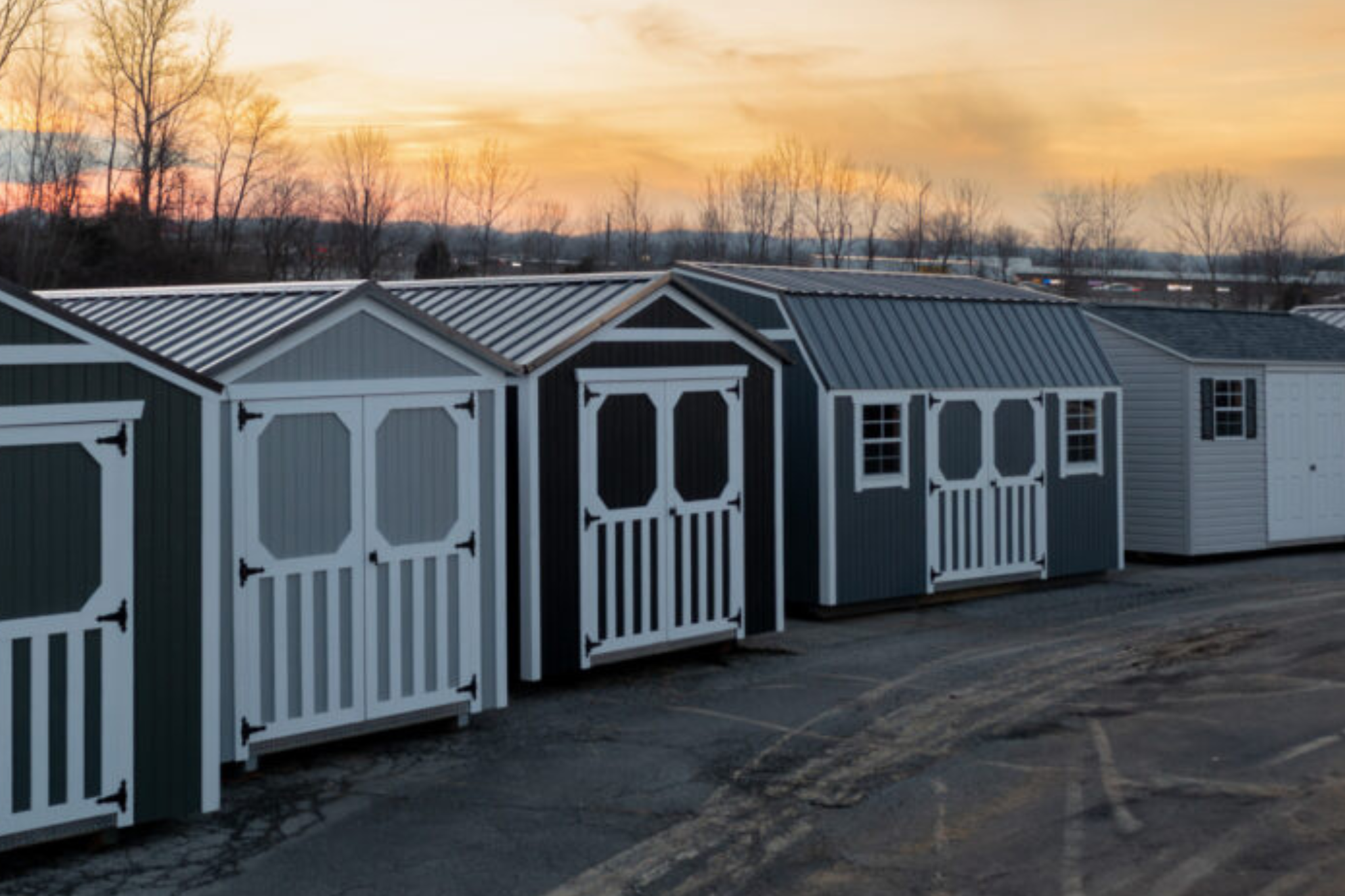
No. The lot is still where most signed deals get finalized, and it’s still the trust surface buyers want to verify on before committing. The digital showroom adds a parallel channel that runs when the lot is closed and reaches buyers the lot would never have touched. The businesses who push past the $3M ceiling almost always have both running together.
The Bottom Line
The 24/7 Showroom Stack is what a shed business looks like when the lot is no longer the only sales engine. Three components, installed in order, produce a system that converts buyers who would never have driven past the property and feeds the lot warm leads who already know what they want.
If you want to see what this stack looks like running on a shed business about your size, that’s exactly what ShedPro builds. We can walk through which components you already have and which ones would compound the fastest for your business.


Copy Link