5 Metrics Every Shed Business Owner Should Track Weekly
Copy Link
Most shed businesses don’t have a growth problem.
They have a visibility problem.
You’re making sales. Leads are coming in. However, it’s hard to tell what’s actually working. As a result, decisions turn into guesses. Over time, that slows growth.
The fix is simple.
Track the right numbers every week.
Not dozens of metrics. Just a few that clearly show where your business is winning and where it’s breaking.
Here are five that matter.
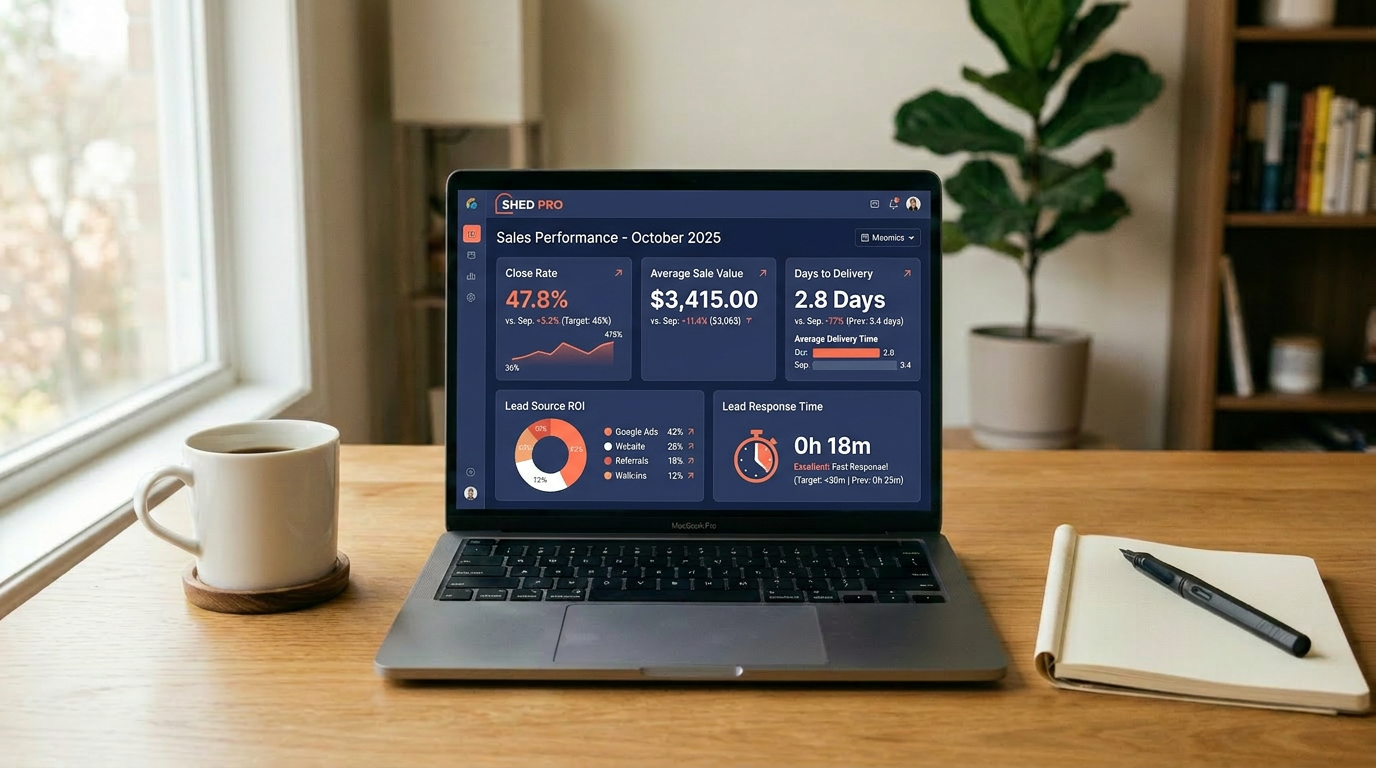
1. Close Rate
This tells you how many of your leads actually turn into sales.
Formula:
Deals Closed ÷ Total Leads
For example, if you close 10 out of 100 leads, your close rate is 10%.
This number shows how effective your sales process is. If your close rate is low, something is off. Either the leads aren’t qualified, or your process isn’t moving them forward.
On the other hand, if your close rate is high, you know your system is working. Now you can focus on getting more leads.
Track this weekly so you can spot changes early.
2. Average Sale Value
This shows how much each sale is worth.
Formula:
Total Revenue ÷ Number of Sales
This metric matters more than most people think. Even a small increase here can drive major growth.
For example, if your average sale goes from $4,000 to $4,800, that’s a 20% increase. You didn’t add more leads. You didn’t hire more staff. Yet, your revenue goes up.
So, watch this closely.
If it drops, you may be discounting too much. If it rises, your team is selling upgrades more effectively.
3. Days to Delivery
This tracks how long it takes to move from sale to completed delivery.
Delivery Date – Sale Date
At first, this may seem like an operations metric. However, it directly impacts sales.
Long delivery times create friction. Customers hesitate. Deals slow down.
On the other hand, faster delivery builds trust and improves your close rate.
So, track this weekly. If it starts creeping up, you need to fix the bottleneck before it affects revenue.

4. Lead Source ROI
Not all leads are equal.
Some sources bring in high-quality buyers. Others bring in price shoppers who never convert.
That’s why you need to track where your best leads come from.
Look at:
- Google Ads
- Website traffic
- Referrals
- Walk-ins
Then compare:
- Cost per lead
- Close rate
- Revenue generated
Over time, patterns become clear.
You’ll see which channels actually drive sales, not just clicks.
From there, you can shift your budget toward what works and cut what doesn’t.
5. Lead Response Time
This is one of the most overlooked metrics.
It measures how fast you respond to new leads.
Why it matters:
The faster you respond, the more likely you are to close the deal.
If a lead sits for hours, or even a full day, interest drops. In many cases, that lead is already talking to someone else.
So, track how quickly your team responds.
Then tighten it.
Faster response times lead to higher conversion rates. It’s one of the easiest wins available.

How to Actually Track These
You don’t need a complex system to start.
However, you do need consistency.
At a minimum, review these numbers once a week.
Even better, use a dashboard that pulls everything into one place. That way, you can see trends at a glance instead of digging through spreadsheets.
Tools like OpsHub help centralize your data. Sales, orders, and delivery timelines all live in one system. As a result, tracking becomes easier and more accurate.
The Real Advantage
Most shed businesses operate on instinct.
They feel busy. They feel growth. However, they don’t always know why things are working or not working.
When you track the right metrics, that changes.
You spot problems early. You double down on what works. You make decisions faster.
That’s how you move from guessing… to growing.
Start with these five. Keep it simple. Stay consistent.
That’s where clarity comes from.
Book a call with us today and we’ll pinpoint the single biggest issue suppressing your online shed sales and give you 3 quick wins you can apply this week.

Copy Link